
Topics of Interest
How Long Do Knee Replacements Really Last
The 6 Worst Exercises for Your Knees
The 6 Best Shoes for Your Knees, According to an Orthopedic Expert
Exercise and Asthma Can Go Together
Regular Hamstring Stretching Prevents Injury
Toning Shoes May Not Be as Beneficial as Advertised
Barefoot Running: Is it a good idea?
Adjust Pain and Inflammation Naturally

A Publication of the American Orthopaedic Society for Sports Medicine
sPorT plus physical therapy, LLC
How Long Do Knee Replacements Really Last
Medically Reviewed By: Donald Allen, MD
Most knee replacements last longer than you think
Many people still think knee replacements only last about 10 years.
“Knee replacement technology has improved tremendously over time,” says Dr. Allen. “Today’s implants, materials and surgical techniques are designed to hold up through years of walking, bending, stairs and daily life.
”Studies show:
- About 82% of total knee replacements last at least 25 years
- About 90% of partial knee replacements last 15 years
“Many older adults may never need another knee surgery,” Dr. Allen adds. “And for a lot of patients, the benefit isn’t just less pain. It’s getting back mobility, independence and the freedom to move through the day without constantly thinking about their knee.”
Partial knee replacement might be a better fit
Not every patient needs a full knee replacement.“
Patients are sometimes surprised to learn we don’t always have to replace the entire knee,” says Dr. Allen. “Sometimes only one part of the knee is damaged, and for the right person, a partial knee replacement can work extremely well.
”A partial knee replacement can:
- Feel more natural for some patients
- Preserve more of the natural knee
- Work well when arthritis is limited to one area
“A total knee replacement replaces the full joint and generally lasts longer overall,” Dr. Allen explains. “But that doesn’t automatically make it the better choice for every patient. It comes down to matching the surgery to the patient and choosing what will give someone the best long-term function.”
Age changes the conversation a bit
A 50-year-old and a 75-year-old may both need knee replacement surgery.
“The age when someone has surgery absolutely affects how we think about implant longevity,” says Dr. Allen. “A younger patient may put more years, more steps and more activity on that implant over time, so we think carefully about how that knee may hold up decades from now.
”Younger patients are usually:
- More active
- More likely to outlive the replacement
- More likely to need revision surgery later
“We don’t want patients suffering unnecessarily,” Dr. Allen adds. “Waiting too long can have a downside too, especially if knee pain is limiting movement, strength or balance. The decision is about finding the right timing, not just the youngest or oldest age.”
Knee replacements can wear down over time
Modern knee replacements are durable, but they aren’t magic.
“No implant lasts forever,” says Dr. Allen. “Even very successful knee replacements are still mechanical joints, which means wear can happen after many years of movement
There are common reasons a knee replacement may fail:
- Implant loosening
- Infection
- Instability
- Plastic component wear
- Fracture around the implant
“Many of these issues happen gradually,” Dr. Allen explains. “Patients may notice increasing pain, swelling, stiffness or instability years later, and those symptoms shouldn’t be ignored or brushed off as aging.”
Revision surgery is possible, but it can be more complicated
If a knee replacement wears out or develops a problem, surgeons can sometimes repair or replace part of the implant.
“That’s called revision surgery, and it’s often more complex than the original knee replacement,” says Dr. Allen. “There can be scar tissue, bone loss and more challenging reconstruction involved.
”Compared to the first surgery, revision surgery may involve:
- Longer recovery
- More technical challenges
- Less predictable outcomes
“We always want to optimize the initial surgery as much as possible,” Dr. Allen explains. “Revision procedures can help when problems happen, but they become progressively more difficult over time. That is why timing, implant choice, alignment and recovery planning all matter from the start.”
You play a role in your outcome
You can’t control every factor that affects how long your implant lasts.
“But there are definitely things you can do to help protect the replacement long term,” says Dr. Allen. “The choices you make after surgery, such as your activity level and follow-up care, can help your knee last as long as possible.”
Try this:
- Avoid repetitive high-impact activity
- Follow rehab recommendations
- Keep routine follow-up appointments
- Maintain a healthy weight
- Stay active with low-impact exercise
“We absolutely want patients moving after surgery,” Dr. Allen adds. “The goal is not to treat your new knee like it’s fragile. Instead, use it wisely with activities that support long-term joint health, such as walking, swimming, cycling and strength training.”
Knee replacement technology keeps evolving
Joint replacement surgery today looks very different than it did 20 years ago.
“Knee replacement technology has advanced tremendously,” says Dr. Allen. “Today’s implants are designed to better mimic natural knee movement, improve durability, stability and overall function.”
But, even with newer technology, surgical technique and patient selection still matter enormously.
“The best implant still needs the right surgical plan, the right recovery and the right patient match,” says Dr. Allen.
When should you talk to a doctor?
If knee pain is starting to affect your life, start the conversation.
“This doesn’t always mean you need surgery, but you should know what’s happening,” says Dr. Allen.
Whether it’s a nonsurgical plan today or time for surgery later, it comes down to your pain, mobility and quality of life.“
Patients don’t have to wait until they can barely walk, either,” says Dr. Allen. “If knee pain keeps you from moving through life the way you want to, getting answers sooner can help you make the right decision.”

A Publication of the American Orthopaedic Society for Sports Medicine
sPorT plus physical therapy, LLC
The 6 Worst Exercises for Your Knees
By Lindsay Ryan Crawford; Medically Reviewed by Cliff Rios, MD
Knee pain shouldn’t be the price you pay for staying active. But certain exercises can put serious stress on the joint — especially if your form slips or the weight is too heavy.
“The knee is strong, but it’s also vulnerable – especially when we overload it or ignore early warning signs,” says Clifford Rios, MD, an orthopedic sports medicine specialist with the Hartford HealthCare Bone & Joint Institute. “Over time, the wrong moves can lead to chronic pain or injury.”
Here are six of the worst exercises for your knees – and better options to try instead.
Deep squats and lunges
Bending your knees past 90 degrees adds pressure across the cartilage toward the front of your knee as well as your menisci – which can lead to pain or long-term wear.
“If you have knee issues, avoid letting your knees go past your toes,” says Dr. Rios. “Stick to shallower squats or reverse lunges for better control. You’ll also want to keep your weight in your heels during squats and lunges. You should be able to lift your toes off the ground while in the squatted position – that means your knees aren’t drifting too far forward.”
Try this instead: Use a chair to guide shallow squats or focus on reverse lunges with your knee aligned over your ankle.
High-impact jumping exercises
High-impact jumping adds force with each landing – and your knees absorb the shock.
“If your muscles aren’t strong or your form is off, that impact can do real damage,” says Dr. Rios.
Try this instead: Step-ups, wall sits or elliptical training offer similar benefits with less impact. If you jump, land softly with knees slightly bent. A softer landing with more motion helps spread the impact across multiple joints, reducing pressure on the knees.
Running on hard surfaces
Concrete and asphalt don’t cushion your joints – and over time, the pounding adds up.
“Running on hard surfaces increases impact with every step,” says Dr. Rios. “Softer terrain and proper shoes can make a big difference.”
Try this instead: Head to a track or trail, wear cushioned running shoes and replace them regularly.
Full arc knee extensions (with heavy weight)
That gym machine where you extend your leg straight out? It puts isolated sheer stress on the front of the knee – especially under heavy load, and this stress is detrimental to cartilage over time.
“Full arc extensions can strain the patellar tendon and front of the joint,” says Dr. Rios.
Try this instead: Wall sits, mini squats or leg presses with limited range keep the joint more stable.
Deep or heavy leg presses
Pushing big weight from a fully bent position compresses the joint – and can overstretch ligaments.
“Leg presses are OK in moderation, but keep the weight light and the movement controlled,” says Dr. Rios.
Try this instead: Avoid bringing your knees too close to your chest. Stick with a shallow bend and smooth motion.
Quick pivots and stops
Basketball, tennis and other pivot-heavy sports demand a lot from your knees – especially if stability is already an issue.
“Sudden stops, turns or landings can challenge the joint,” says Dr. Rios. “If you have knee pain, it’s smart to scale back.”
Try this instead: Swap in low-impact options like swimming, cycling or rowing. Always warm up and wear supportive footwear.
How to protect your knees – and still get a good workout
You don’t need to stop exercising – you just need the right strategy. And avoiding the worst exercises for your knees can help protect your joints while keeping you active.
Dr. Rios recommends:
Avoid sharp or deep movements if you have knee pain.
Listen to your body – pain is a signal, not a challenge.
Use proper form, even with light weights.
Work with a physical therapist or trainer if needed.
Stretch regularly – tight muscles put extra stress on your joints.
“Most knee pain is manageable with smart changes,” says Dr. Rios. “You can stay active and protect your joints at the same time.”
A Publication of the American Orthopaedic Society for Sports Medicine
sPorT plus physical therapy, LLC
Trampoline Safety Critical
By Brian R. Wolf, MD
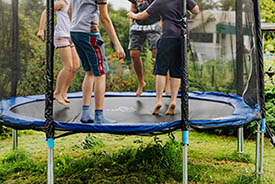
Trampolines are growing in popularity in the United States. When used properly they can provide good fun and exercise for children and adults. However, the risk of injury when using a trampoline is significant. It is estimated that more than 100,000 people each year are treated in emergency rooms for trampoline-related injuries.
In fact, the American Academy of Pediatrics recommends against using trampolines. Most injuries are bruises, sprains, or fractures. Catastrophic injuries, including paralysis or death, have occurred but are not common.
In light of this potential for injury, several recommendations can potentially help limit trampoline injuries:
- Children should be at least 6 years old to participate
- Only one person at a time should be on the trampoline to minimize risk of injury from contact with other people.
- Children on trampolines should always be supervised by an adult.
- Somersaults, flips, and maneuvers other than simple jumping are not recommended.
- Trampolines should be located on level ground and should not have a ladder so little children can climb on unsupervised.
- Netting and pads around the trampoline are highly recommended and can help limit trampoline injuries from falling off but need to be inspected regularly.
If you are going to jump for fun this summer, do it safely and wisely!

A Publication of the American Orthopaedic Society for Sports Medicine
sPorT plus physical therapy, LLC
The 6 Best Shoes for Your Knees, According to an Orthopedic Expert
By Leah Vichas, Medically Reviewed by: Mark Shekhman, MD
If you’re tired of achy knees after a long day, it might be time to take a look at your shoes.
It’s easy to write knee pain off as aging, arthritis or old injuries, but the shoes you wear can have just as much of an impact.
“The right shoes can provide a cushion, align your joints and make walking or standing much more comfortable,” says Mark Shekhman, MD, an orthopedic surgeon at the Bone & Joint Institute at Hartford Hospital. “On the other hand, unsupportive shoes can put extra strain on the knees over time.”
If you’re looking for shoes for knee pain, here are six styles Dr. Shekhman says your knees will thank you for.
Chunky sneakers
Good news for anyone who loves the “dad shoe” comeback: Chunky sneakers can actually be a smart choice for knee pain.
Think Hoka-style soles, New Balance classics or other cushioned sneakers with a wide, stable base. The goal isn’t just comfort. It’s shock absorption.
“Running or walking shoes with cushioning and arch support reduce the stress on your joints with every step,” Dr. Shekhman says.
Look for a pair that feels stable, not wobbly, and avoid overly soft soles that make your foot sink or roll. And if your feet tend to roll inward, try to find sneakers labeled “stability” or “motion control.”
Everyday walking shoes
For errands, travel days or long stretches on your feet, the best walking shoe is usually the one that feels steady, cushioned and easy to wear for hours.
“These shoes are designed to absorb shock, which helps protect not only the knees but also the hips and back,” says Dr. Shekhman.
Look for a shoe with a cushioned sole that doesn’t feel too squishy, a firm back that holds your heel in place and a wider toe box so your toes aren’t cramped. If you can twist the shoe like a towel or fold it completely in half, it probably isn’t giving your knees much support.
But make sure to avoid trendier options, like canvas slip-ons, thin retro sneakers and flat fashion shoes, which usually don’t offer enough structure for knee pain.
Low, wide-heeled dress shoes
High heels may look good, but your knees don’t love them.
“Even a two-inch heel can increase pressure on the kneecap and surrounding joint,” Dr. Shekhman notes. “If you want a little height, choose a low, wide heel instead.”
The best swaps are block heels, short wedges or dressy flats with built-in arch support. For work events, weddings or nights out, look for a heel that’s under two inches and wide enough to keep your foot stable.
Slip-on loafers
Loafers are having a moment, from chunky lug-sole styles to office-ready pairs. But when it comes to knee pain, the details matter.
“Without ankle support to maintain proper mechanical alignment, these create too much pressure on the knees and can cause pain,” says Dr. Shekhman.
Instead, look for loafers or flats with cushioning, a supportive insole and plenty of ankle support. And beware of backless loafers or mules, which make your foot work harder to keep the shoe on.
“The key is having a shoe that stabilizes your foot and doesn’t let it collapse inward,” he adds.
That extra support helps align your legs and reduces strain around your knees.
Sandals with arch support
Flip-flops are a summer favorite, but they’re rarely knee-friendly. The thin sole, loose fit and lack of arch support can change the way you walk, which may put more stress on your knees.
But supportive sandals are a different story.
“Sandals with good arch support and a thicker sole can actually be a great choice,” Dr. Shekhman notes. “Brands like Tevas and Naot have well designed arch supports.”
Look for sandals with adjustable straps, a contoured footbed and a sole that feels sturdy under your foot.
Boots with plenty of cushioning
Boots are a stylish winter footwear choice, but they can also be troublemakers for knee pain.
Very flat boots may not offer enough cushioning. High-heeled boots can shift your weight forward. And heavy boots can make each step feel like more work.
“Choose boots with a cushioned sole and a stable base, rather than very flat or very high-heeled styles,” Dr. Shekhman suggests.
Ankle boots with low heels or lace-up boots with supportive insoles can carry you comfortably through colder months.
The right shoes can take pressure off your knees
Shoes may not be the first thing you think of when your knees hurt, but they can make all the difference.
“The right footwear supports proper alignment and decreases the stress your knees absorb with every step,” says Dr. Shekhman.
And the best part? With so many supportive options now designed to feel just as good as they look, you don’t have to sacrifice style to protect your joints.
A Publication of the American Orthopaedic Society for Sports Medicine
sPorT plus physical therapy, LLC
Exercise and Asthma Can Go Together
By Daniel Solomon, MD
Asthma is among the most common medical conditions affecting athletes. More than 20 million people in the U.S. have been diagnosed with asthma, though not all need ongoing medication. Exercise-induced asthma (EIA) affects 12-15% of U.S. population. Athletes, coaches, athletic trainers, and parents should be familiar with common symptoms and triggers, and have an asthma treatment plan.
The most common cause of breathing difficulty during or after workouts is undiagnosed or untreated asthma. Common symptoms include:
- Wheezing
- Chest tightness
- Coughing
- Fatigue
- Shortness of breath
- Nighttime breathing difficulty
- Decreased athletic performance.
EIA prevalence increases in cold, dry weather, or if air-borne particles, including allergens, pollen, and air pollution are present. Other health issues, such as hay fever or allergies, upper respiratory infections or gastroesophageal reflux (GERD), or poor physical conditioning can predispose people to EIA. Because of the prevalence with cold, dry air, winter sport athletes have increased susceptibility. Chlorine may also play a role; swimmers, especially in indoor pools, may be at higher risk. Certain medications, including aspirin, Beta-blockers, non-steroidal anti-inflammatories (NSAIDs), and diuretics can also trigger EIA.
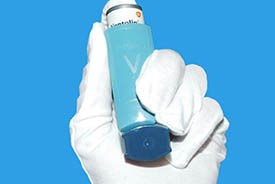
Treatment in an acute event includes removing athlete from competition or practice, administration of a rapid-onset metered-dose inhaler (albuterol is the most common). Spacer devices may help deliver an appropriate medication dose in more anxious patients. If the initial treatment fails or is unavailable, transfer to an emergency medical facility may be necessary.
Long-term treatment includes avoidance of trigger situations and prevention. Warm, moist air is most helpful. Proper warm-up and breathing techniques may also minimize symptoms. Relapses can occur, so an athlete who experiences an acute EIA attack should be monitored and kept out of play until respiratory effort and breathing is normal. If symptoms do not resolve completely, the athlete should not return to play.
A Publication of the American Orthopaedic Society for Sports Medicine
sPorT plus physical therapy, LLC
Regular Hamstring Stretching Prevents Injury
By Robert Gallo, MD
Hamstring strains are a common cause of recurring injury in sport and account for a significant amount of lost time for both the weekend warrior and professional athlete. Stretches to improve hamstring flexibility are frequently incorporated into work-out routines to minimize risk of injuries. Improved hamstring flexibility has been speculated to improve athletic performance.
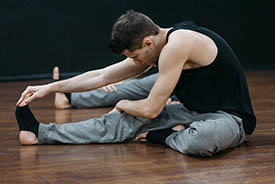
Stretching exercises are divided into static, dynamic, and proprioceptive exercises.
- Static – muscle stretched slowly to tolerance and held in position of maximal stretch for a defined period of time
- Dynamic – muscle stretched by moving from resting position to maximal stretch and returned to resting position; motion continues for a defined period of time
- Proprioceptive – muscle contracted directly prior to static stretch of same muscle
Static routines are the traditional stretches that are commonly used in most training regimens. Static stretches have been proven to improve flexibility to a greater degree than dynamic stretches, which are also more likely to cause injury due to potential for uncontrolled stretch of the muscle. Studies have suggested that despite advantages in flexibility static stretching may actually decrease performance.
On the other hand, dynamic stretching has been shown to improve agility, speed, and strength. Therefore, a regular regimen of static stretching combined with dynamic stretching immediately prior to athletic activity may provide the optimal balance of improved performance and flexibility. The use and knowledge of the efficacy of proprioceptive techniques remains limited because of expertise required to perform the exercises correctly.
Most hamstring stretches vary in the position of the hip at the initiation of the stretch. Studies indicate that stretches that begin with the hip and pelvis flat are more effective than those in which the hip is flexed at 90 degrees. There appears to be no difference if the stretches are performed sitting versus standing.
Lasting improvements in flexibility are related to duration of stretching. Static stretches should be held for a minimum of 30 seconds to produce a significant effect in flexibility. While the exact number of repetitions and days necessary to produce lasting improvements in flexibility are controversial, most improvements gradually fade once stretching regimens are discontinued. There, in order to preserve gains in flexibility, stretching should be continued indefinitely.

A Publication of the American Orthopaedic Society for Sports Medicine
sPorT plus physical therapy, LLC
Toning Shoes May Not Be as Beneficial as Advertised
By Monte Hunter, MD, and Jeff Dowling, PhD
Fit shoes, or toning shoes, have become the latest fitness rage. With marketing claims to burn more calories, improve endurance, tone leg muscles, reduce joint pain, and improve posture, these shoes have become increasingly popular and visible over the last two to three years. They represent the fastest growing segment of the shoe industry and are expected to create $1.5 billion in revenue in 2011.
One fit shoe style was inspired by the Masai people who are known for their perfect posture and lack of low back pain. The founder of Masai Barefoot Technology (MBT) observed that the Masai walked barefoot over soft earth and sand. The curved sole or rocker bottom of the shoe was designed to create an unstable walking base meant to mimic the natural environment of the Masai. This design is thought to strengthen muscles in the lower leg and ankle as the shoe wearer works harder to maintain balance during normal activities.
The MBT shoe is the original “fit shoe.” It originated in Switzerland in 1996, and came to North America in 2003. MBT and Skecher Shape-Ups are the most common of these shoes. The Reebok Easy Tones are similar, but are designed with pods in the forefoot and heel. The common denominator is an unstable walking base and a price tag of $100 to $250. Not all shoe companies have embraced the concept and some have thus far stayed out of this market.
Fit shoes are touted as having several benefits: stronger muscles in the legs, back, buttocks, and abdominals; improved cardiovascular endurance; reduced body fat; increased circulation; and decreased neck, back, ankle, and foot pain. These benefits are mainly supported by consumer testimonials, and celebrity endorsements. Companies have performed research studies supporting the benefits of the shoes, but many of these studies are poorly designed and not peer-reviewed.
The American Council on Exercise recently released two studies comparing the benefits of fit shoes from MBT, Skechers, and Reebok with traditional running shoes from New Balance. These studies concluded there was no evidence to support the claims that fit shoes help wearers exercise more intensely, burn more calories, or improve muscular strength or tone compared to the traditional shoes.
As of march 2011, only two randomized controlled studies exist analyzing the effects of these or similar shoes. The only claims supported by these studies are some pain reduction over time in patients with moderate osteoarthritis in the knee or low back pain.
Claims have also been made that wearing these shoes has caused injury (ankle sprains and even stress fractures) and increased knee or low back pain. There are currently no studies to support or suggest that these shoes are dangerous to wear or cause increased pain.
Fit shoes may benefit some patients with knee or low back pain, but cannot be recommended for the other touted benefits at this time.

A Publication of the American Orthopaedic Society for Sports Medicine
sPorT plus physical therapy, LLC
Barefoot Running: Is it a good idea?
By John D. Kelly IV, MD
Barefoot running has become the craze with many “experts” extolling its virtues. The book sensation, Born to Run, has generated much interest in the subject of barefoot running. The book’s thesis is that shoeless running is kinder and gentler to the body. But is this statement supported by science? Indeed, many high performance runners have succeeded in both running and training shoeless. However, most world class runners are still found wearing shoes during competition.
There actually is some basic science to support the virtues of barefoot running but the clinical data is sparse. Similarly, there are no good data to support the industry’s claim that running shoes prevent injury.
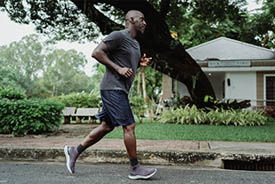
The mechanics of running have changed significantly during shoe wear. During shoeless running, the edge of the foot strikes the ground with the most force and the impact stress is spread out. Also, foot pronation – Mother Nature’s way of dissipating impact stress during landing – is unimpeded in the barefoot runner. Running in shoes (especially heavily padded ones) typically shifts more impact away from the arch, prevents full pronation, and shifts stress to the heel and hind foot. Shoe runners also tend not to flex their foot when running as often. Finally, oxygen consumption in runners is increased by approximately four percent when shoes are worn.
To Run or Not
By: Dr. Mel Eggebrecht, DPT, CWT, CSST
sPorT plus physical therapy, LLC
Are you sure you should be running? What about your knees? Won’t running make your knees worse? Chances are, if you’ve ever been a runner or ever thought about running, these questions have crossed your mind. Or perhaps the minds of family or friends who assume the pavement pounding is destroying your joints and you’ll eventually need a knee replacement because of your arthritic joints.
Osteoarthritis (OA) is the most common type of arthritis, affecting nearly 27 million Americans. 2 OA is a degenerative disease which occurs when cartilage, the spongy tissue that cushions the bones in a joint, breaks down and deteriorates, making weight-bearing activities painful. Knowing this, many people believe that running accelerates this process.
The number one risk factor for developing OA is excess body fat. Sedentary, overweight people are 45 percent more likely to develop OA than those who are active. 4 Losing weight is one way to prevent OA. Losing 10 pounds can take about 45 pounds of pressure off the knee. 4 Running is an effective calorie burner and may contribute to improved joint health.
Research supports there are many benefits from running. Running not only helps in weight reduction, it improves body functions including your heart and lungs, but also your joint health. When you perform weight bearing exercises, the cartilage in your hips, knees, and ankles compresses and expands. This draws in oxygen and flushes out waste products, nourishing and keeping cartilage healthy. 3 Furthermore, running strengthens the ligaments that help support the joints, making them more stable and less susceptible to injury which can damage cartilage and eventually lead to OA.
So what about the injury predictions for the long term effects of running? A study published in the American Journal of Preventive Medicine shows that running was not associated with greater rates of OA and runners do not require more total knee replacements than non-runners. 3 The fact is if you run responsibly you’re no more susceptible to OA than the general population. This is not to say that running is the only activity that’s good for you. Vigorous activity has a larger impact on our health but we can’t ignore the helpful benefits of activity at all levels. It’s important to be physically active, no matter what the level, your whole life. 3 Exercise is still the best medicine.
References:
- Chakravarty, E., Hubert, H., Lingala, V., & Fries, J. Reduced disability and mortality among aging runners – a 21 year longitudinal study. Arch Intern Med. 2008; 168(15): 1638-1646.
- Colino, S. Joint efforts – how to live a better life with arthritis. Healthy Living. 2009; 15(2): 58-61.
- Fries, J., Chakravarty, E., Hubert, H., Lingala, V., & Zatarain, E. Long distance running and knee osteoarthritis: a prospective study. Amer J. of Preventive Med. 2008; 35(2): 133-138.
- Ketteler, J. The benefits of running. Runner’s World. October, 25, 2007.
Adjust Pain and Inflammation Naturally
By: Dr. Mel Eggebrecht, DPT, CWT, CSST
sPorT plus physical therapy, LLC
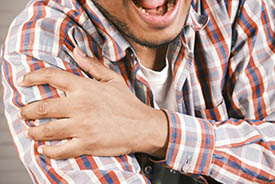
Many suffering from osteoarthritis (OA) and/or rheumatoid arthritis (RA) have considered natural supplements to ease their aches and pains. Some herbal medications have a proven track record. But the extent of products out there can be overwhelming. The ten most common supplements (in alphabetical order) are listed below and were featured in Arthritis Today magazine.
The following information was compiled to be used as a resource when discussing options with your doctor. Naturally extracted chemicals and supplements should be used with caution as interactions with prescription medications are possible. CHECK WITH YOUR PRIMARY CARE PHYSICIAN BEFORE TAKING A SUPPLEMENT.
- Cherry Extract
Claims: Reduces pain and inflammation related to OA
How it works: Tart cherries are a source of antioxidants shown to inhibit COX-1 and COX-2 enzymes which cause inflammation.
- Chondroitin Sulfate
Claims: Slows the progression of OA; reduces pain and inflammation
How it works: May slow cartilage loss by inhibiting certain enzymes; helps cartilage retain water; works better combined with glucosamine. Takes 6 weeks to see benefits.
- Fish Oil
Claims: Reduces inflammation and stiffness; inhibits RA development
How it works: Is a potent source of omega-3 fatty acids, which reduce inflammation. It can take several months to see benefits.
- Ginger
Claims: Eases joint pain and reduces inflammation for both RA and OA
How it works: Inhibits inflammatory chemicals
- Ginkgo
Claims: None to having a direct effect on RA or OA. It does increase blood flow and circulation in those with reduced circulation and pain in the legs.
How it works: Has anti-inflammatory and antioxidant properties.
- Glucosamine
Claims: Slows cartilage deterioration in OA; relieves OA related pain
How it works: Contains compounds necessary for the building of and maintaining of connective tissue including cartilage. It helps cartilage absorb water; keeps joints lubricated; may prevent breakdown of cartilage.
- MSM
Claims: Reduces pain and inflammation
How it works: Helps the body form connective tissue; reduces nerve impulses that transmit pain.
- Rose Hip Extract
Claims: Reduces OA related pain and inflammation
How it works: Has antioxidant properties; are rich in essential fatty acids that inhibit COX-1 and COX-2 enzymes which cause inflammation.
- SAM-e
Claims: Treats stiffness, pain and joint swelling; rebuilds cartilage; eases symptoms of OA
How it works: It is an anti-inflammatory and analgesic.
- Turmeric
Claims: Reduces pain, inflammation, and stiffness from OA and RA
How it works: Has anti-inflammatory properties and modifies immune system responses.
Reference : Pagan, Camille N. (2009). Nourished by Nature. Arthritis Today, September/October, 2009, pgs. 70-79, 87-88, 90.
Benefits of Strength Training
By: Dr. Mel Eggebrecht, DPT, CWT, CSST
sPorT plus physical therapy, LLC
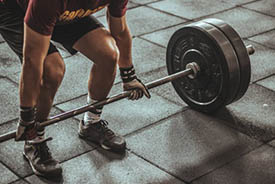
National Physical Therapy Month, sponsored by the American Physical Therapy Association (APTA), is a nationwide observance held each October. This year’s theme is, “Move Forward: Physical Therapy Brings Motion to Life”. A simple way to get moving is to add a strength training program to your exercise routine. Listed below are the Top 10 Benefits of Strength Training:
1. Increased Metabolic Rate – Strength training increases the body’s metabolic rate, causing the body to burn more calories throughout the day.
2. Increasing and Restoring Bone Density – Inactivity and aging can lead to a decrease in bone density and brittleness. Studies have clearly proven that consistent strength training can increase bone density and prevent Osteoporosis.
3. Increased Lean Muscle Mass and Muscle Strength, Power, and Endurance – Everyone can benefit from being stronger. We can work harder, we can play more, we can workout longer, and we can be more alive.
4. Injury Prevention – A wide variety of sports-related or life-related injuries can be prevented by strengthening muscles and joints.
5. Improved Balance, Flexibility, Mobility and Stability – Stronger and more resilient muscles improves our balance, which means more comfortable living & fewer falls or accidents.
6. Decreased Risk of Coronary Disease – Participation in a consistent strength-training program has a wide variety of affiliated health benefits including decreasing cholesterol and lowering your blood pressure.
7. Aids Rehabilitation and Recovery – One of the best ways to heal many types of injuries is to strengthen muscles surrounding the injured area. The stronger your muscles, the quicker the healing process.
8. Enhanced Performance in Sports or Exercise – No matter what your favorite sport or physical activity, with the proper strength training program, your performance can unquestionably be improved.
9. Aging Gracefully – Physical activity keeps us alive and vibrant. Strength training ensures we are strong enough to participate in aerobic activities, outdoor recreation, and sports. Strong seniors fall down less. If they do fall down, their stronger bodies are more resilient, are injured less by the fall, and are able to heal more quickly after an injury.
10. Feeling Better and Looking Better – Stronger muscles and joints can have a dramatic impact on posture and leaner toned muscles tend to make everyone feel better about their appearance. This all leads to improved self-esteem and increased self-confidence.
To find out how you can “Move Forward” and start strength training, please call sPorT plus physical therapy, LLC at 715/339-6140. sPorT plus physical therapy is currently accepting new patients. Call for an appointment today!
sPrain vs sTrain
By: Dr. Mel Eggebrecht, DPT, CWT, CSST
sPorT plus physical therapy, LLC
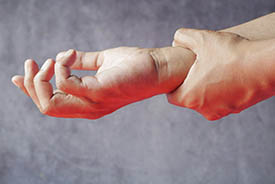
Is it a sprain or is it a strain? A sprain is an injury to the ligaments or other tissue around a joint. A strain is an injury caused by overuse or overstretching of a muscle.
Both injuries cause pain and swelling. Whether it is a sprain or a strain the basic treatment principles are the same: RICE, which stands for Rest, Ice, Compression, and Elevation to treat the acute pain or injury. Begin the RICE process immediately following injury.
- R. Rest. Injured muscle, ligament, or tendon tissue needs time to rest to heal. Resting an injury can include limiting use of the joint for 24 to 48 hours, or the use of slings, splints, crutches, or taping.
- I. Ice. Cold will reduce pain and swelling and promote healing. Heat feels nice, but it does more harm than good if it is applied too soon (less than 72 hours) after an injury. Apply ice or cold packs immediately, at least 3x/day for the first 72 hours, 10-15 minutes once an hour as needed.
- C. Compression. Wrap the injured area with an elastic (Ace) bandage or compression sleeve to immobilize and compress the area. Careful not to wrap too tightly. With or without a wrap, the joint needs total rest for 1-2 days.
- E. Elevation. Elevate the injured area while you apply ice and anytime you are sitting or lying down. True elevation means keeping the injury at or above the level of your heart to help minimize swelling.
If symptoms do not improve after 48 hours of home treatment you should call your physician.
It may not always be possible to prevent accidents that cause sprains or strains. Whether it’s a ‘P’ (sprain) or a ‘T’ (strain), PT (physical therapy) can help. A physical therapist with orthopedic training can: identify specific tissue problems, provide other therapies such as modalities (ultrasound, electrical stimulation), and develop a customized exercise program for your recovery.
For questions or concerns related to this article, please call Dr. Mel Eggebrecht, DPT at sPorT plus physical therapy, LLC (715)339-6140.